
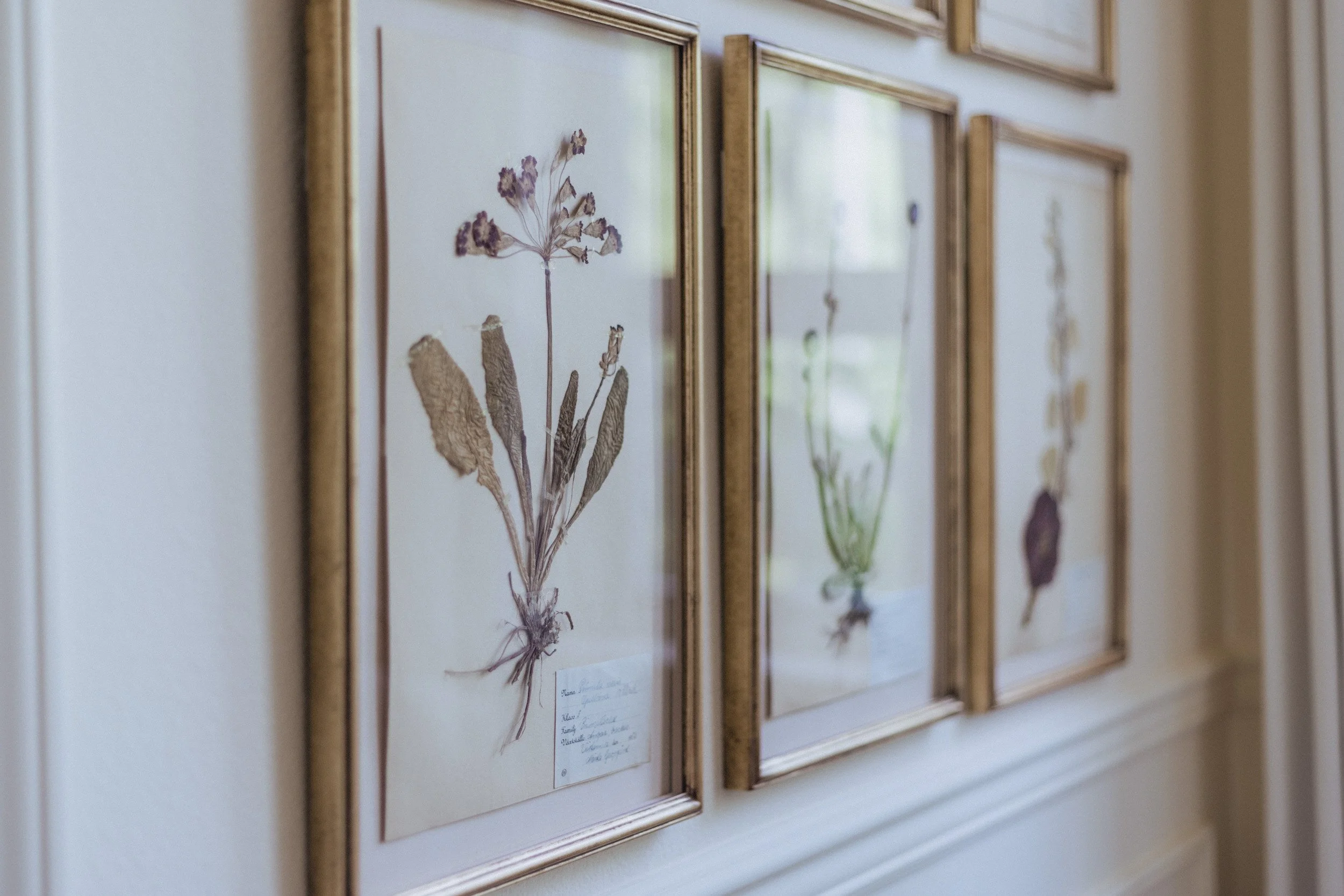

Framed Herbarium Art & Antique Pressed Flowers: History and Legacy
For centuries, people have pressed plants between pages, not only to preserve their beauty, but also to record the natural world around them. The practice began in 16th-century Italy, where physician and botanist Luca Ghini first mounted dried specimens onto paper for teaching and scientific study. Unlike fragile live plants, these pressed flowers could travel across borders, allowing scholars to compare discoveries and build the foundations of modern botany. What started as a scientific tool quickly spread across Europe: students carried pressed plants in notebooks, explorers tucked them alongside maps and journals, and apothecaries kept them as guides to remedies. A pressed flower could outlast its living counterpart, becoming evidence of discovery in a world still being named.
From Science to Personal Keepsakes
Over time, herbariums moved quietly out of lecture halls and into everyday life. Gardeners pressed flowers for design, while poets and lovers tucked them into books. Collectors built archives that traced plants across continents, documented the history of medicine, and recorded changes in the climate. Today, the world’s great universities and museums hold millions of specimens, some pressed hundreds of years ago and still perfectly intact.
Yet herbariums have always carried something personal as well, keepsakes of gardens past, reminders of walks in the woods, or records of flowers once given and received. Each specimen is both history and story, a preserved moment of nature held in time, the very essence of what inspires modern framed herbarium art.
A Dialogue Between Science and Art
These historic collections extend a centuries-old conversation between science and art, honoring discovery while celebrating the natural beauty of every plant and bloom. Today, antique pressed flower art preserves this legacy, allowing collectors, designers, and lovers of botanical history to bring timeless European herbarium specimens into modern interiors.